Retail Tradin2026-09-14 00:00:00Tulip King argues retail trading could define the next 20 years of market structureA PANews article compiled from commentary by Tulip King frames the rise of retail trading as more than a reaction to economic stress or speculative desperation. The piece argues that what looks like chaos on the surface may actually be the turning point of a much longer cycle, one in which open networks, creator culture and crypto-native financial rails push individual participants closer to the center of global markets. To make that case, the article compares crypto with YouTube. Just as YouTube lowered the cost of publishing and distribution, allowing creators to challenge television, newsrooms, consumer brands and even Hollywood, crypto is described as doing something similar for trading and finance: always on, permissionless, global and cheap to access. The article points to Bitcoin, Zcash, stablecoins, Ethereum, Solana, Hyperliquid, prediction markets, perpetual futures and flash loans as signs that crypto has already built new monetary and market infrastructure. Tulip King also argues that the next stage may revolve around social trading. Streamers with visible track records, onchain performance data and creator-style distribution could shape how traders are followed, how capital is allocated and how talent is hired. Even so, the article does not claim everyone will make money. Its narrower point is that future market volume may become far more retail-driven, even if profits remain concentrated among the most skilled participants.970
Fomo2026-09-07 01:09:10Fomo’s revenue and user growth surge, but most retail traders are still losing moneyFomo has become one of the most talked-about names in onchain social trading this summer, with revenue, app rankings and active users all climbing at a rapid pace. According to the source article by Bootly, the app posted $13.8 million in revenue in August, up from a previous monthly record of $6.4 million in July, and hit a new daily high of $1.1 million on Sept. 1. Daily active users rose from 7,500 in June to 101,000 in the most recent week, while the app moved up to No. 15 in the U.S. App Store finance category after previously reaching the top three. The article says much of that activity still comes from meme coin trading, especially on Solana, where meme pairs account for 40% to 60% of spot pairs on Fomo. It also highlights growth from Hyperliquid access for non-U.S. users and a recent boost from Robinhood Chain, whose daily spot DEX volume reportedly crossed $2 billion for the first time. But the same report argues that the app’s popularity has not translated into broad user profits. A public Dune query cited in the piece found that only about 6.16% of roughly 293,000 wallets trading through Fomo over the past 90 days recorded positive returns, while the group lost about $1.26 billion in aggregate.250
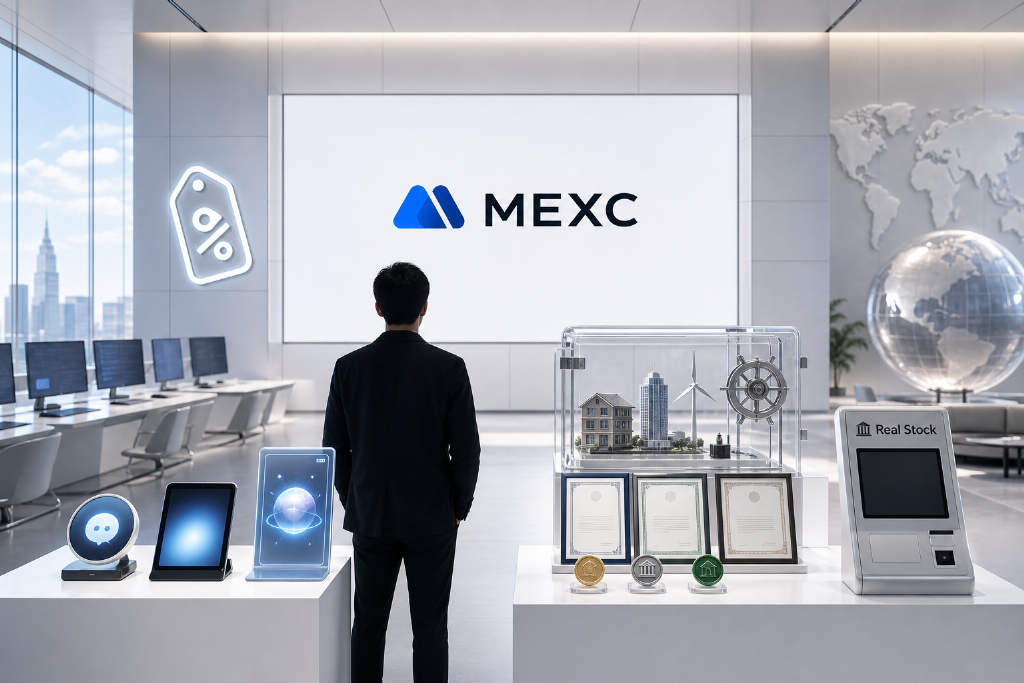
MEXC2026-09-02 04:03:18MEXC product chief outlines zero-fee strategy, RWA expansion and a three-stage AI roadmapMEXC Product Director Vivien Lin used a lengthy interview with BlockBeats to lay out how the exchange thinks about product design, retail user acquisition, real-world asset access and AI-driven trading. Her core argument is that the next phase of exchange competition will not be decided by simply listing more assets or piling on more features, but by reducing the distance between users and tradeable opportunities. Lin said MEXC’s zero-fee approach was designed to cut both direct trading costs and the psychological barrier to entering the market. Combined with liquidity and low-slippage execution, she described that mix as a key part of the platform’s retail-focused edge. She also said the exchange now serves more than 40 million users worldwide. On listings, Lin said MEXC mainly looks at two factors: user participation and liquidity. On market expansion, she said MEXC has already launched more than 350 RWA-linked instruments, including single stocks, indexes, gold, silver and crude oil, and that its Real Stock product connects directly to licensed traditional brokerage infrastructure to give users 1:1 exposure to underlying assets. Lin also mapped out MEXC’s AI plan in three steps: Assistant, Copilot and, eventually, a Financial Operating System. She said the company is now moving from the second stage toward the third while working through computing, algorithm and performance constraints.410
South Korea2026-08-30 01:44:26Korean chip leveraged ETF turnover falls to 4% of peak after tighter trading rulesTurnover in 2x single-stock leveraged ETFs tied to Samsung Electronics and SK Hynix has dropped to 4% of its June peak, according to Bloomberg. The products may also post their first monthly net outflow since launch in August. South Korea has tightened trading rules since July, and a mandatory paper-trading requirement that took effect on Aug. 19 is seen as a key reason retail participation has weakened. Under the rule, investors must complete a five-day simulation course, install a Windows-only desktop program, and trade with virtual funds for at least one hour a day. The platform provides KRW 100 million in simulated capital to demonstrate the risks of leveraged products and "volatility drag." Investors must also meet a minimum cash deposit requirement of KRW 30 million. Data cited in the report show the ETFs saw combined net outflows of about $1 billion in August, while assets under management fell from a late-June peak of $11.4 billion to $5 billion as of Aug. 27. Bloomberg Intelligence analyst Rebecca Sin said outflows may continue in the near term if regulators keep tightening the rules.840
Whale Movemen2026-08-27 06:30:00Former Foresight Ventures co-founder pitches Mojo as an AI trading product built around trader behaviorWhiteForest, a former co-founder of Foresight Ventures, has published a lengthy critique of the current AI trading market while introducing Mojo, a product he says is designed to confront retail traders with their own repeated mistakes instead of feeding them more signals. Drawing on his time overseeing five business lines at Bitget and reviewing trading data from hundreds of thousands of retail users, he argues that retail losses are not mainly caused by weak judgment or a lack of information. In his view, the bigger problem is execution at critical moments and the absence of systems that can surface a trader’s own prior rules, comments, position limits, and repeated behavior before another trade is placed. The article groups most AI trading offerings into four categories: strategy cards, copy-trading agents, AI analysis chatboxes, and products that integrate large language models but reduce them to rigid, hard-coded workflows. WhiteForest says those products optimize distribution, engagement, or data collection rather than decision quality. He uses that framework to present Mojo as a system that can show a user what they did over the prior 12 months, what they previously said they would do, and whether they are simply repeating a pattern. He also makes broader claims about how user behavior data could be captured and monetized by proprietary trading firms if the market keeps moving in its current direction.1070
Webull2026-08-25 01:56:21Webull CEO says Bitcoin and Ethereum buy orders jumped nearly 300% over the past week and a halfWebull CEO Anthony Denier said buy orders for Bitcoin and Ethereum on the platform surged nearly 300% over the past week and a half. He linked the increase to the June removal of the PDT, or pattern day trading, rule, which had previously restricted frequent trading by users with account balances below $25,000. Speaking in an interview with CNBC, Denier said the rule change altered how Webull’s retail users trade. He added that the platform’s average account size is about $5,500, well below the old threshold. Denier also said the rule change has already shown up in the company’s financials, with revenue rising from $160 million in the first quarter to nearly $200 million in the second quarter. The item was cited by BeInCrypto and carried by Techub News.920
CME2026-08-24 00:45:38CME Revives Single-Stock Futures as It Tries to Win Back the Retail Trading Entry PointCME Group relaunched single-stock futures on July 27, 2026, listing 55 standard contracts and 22 micro contracts tied to names including Apple, Nvidia, Tesla, and newly public SpaceX, while extending trading to 23 hours a day with a one-hour maintenance break. The move, as described in the Foresight article, is aimed at a market that has already been trained by crypto perpetuals to expect round-the-clock leveraged access. The report argues that CME is not introducing a new behavior so much as trying to pull an existing one back into the traditional exchange system. It contrasts the structure of perpetual contracts, where funding costs are settled during the holding period, with single-stock futures, where financing costs are embedded in the basis between futures and spot prices and where investors must roll positions before expiry. Foresight also highlights CME’s split posture on perpetuals. CEO Terry Duffy has criticized the product and CME has pushed for stricter regulation, yet Duffy has also said the exchange already has the technical and operational ability to offer perpetual contracts if customers want them. The broader question is whether traders who have become used to perpetuals’ interface, funding visibility, and trading style will switch to a more traditional futures product simply because it is now available nearly around the clock.1210
Bank of Russi2026-08-12 11:27:27Bank of Russia to limit retail crypto trading from Sept. 1 to BTC, ETH and USDTThe Bank of Russia will begin limiting retail cryptocurrency trading on regulated exchanges starting Sept. 1, allowing access only to Bitcoin, Ether and USDT. Under the rules, non-qualified investors will face an annual purchase cap of 300,000 rubles, or about $3,600, through a single intermediary, while qualified investors will not be subject to a ceiling. The move clarifies legislation passed in July rather than introducing a separate framework. At the same time, the existing legal ban on using cryptocurrency for payments inside Russia remains in place. CoinDesk was cited as the source of the report.1420